When choosing a boat, it’s important to understand how much it might weigh, as you’ll need to know how many pounds your boat is before purchasing or renting a trailer or lift. A pontoon boat’s weight depends on its length and the type of pontoon, such as leisure, fishing, or sport.
What is a pontoon boat?
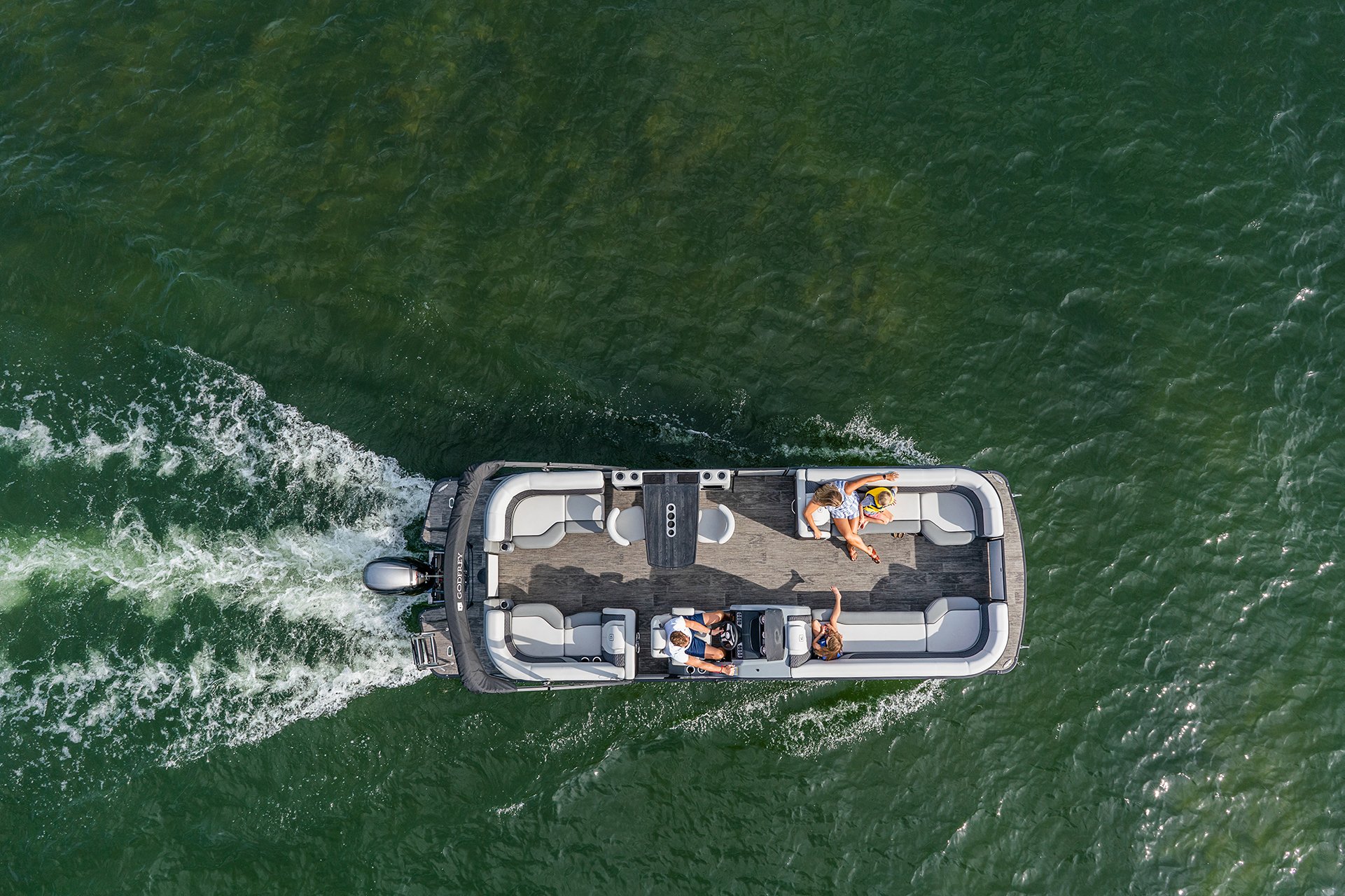
Pontoon boats are recreational boats named after the pontoons (or tubes) that allow them to float. They are usually designed as catamarans, with one tube on either side, but some models have a third pontoon in the middle.
Pontoon decks are flat and feature ample bench or lounge seating for passengers, as well as convertible bimini tops to provide shade and ladders to provide access to the water. They’re sometimes outfitted with extra accessories, like sinks, tables, additional storage, audio systems, fishing chairs, sundecks, slides, and more.
Pontoons are popular with families and boaters who enjoy entertaining guests. In addition to being for cruising, pontoons are also sometimes designed for sports like water skiing, wakeboarding, and tubing.
How much does a pontoon boat weigh?
The average pontoon has a dry weight of about 2,200 lbs. To estimate the weight of a pontoon, a good rule of thumb is to multiply the length of the boat by 100. For example, if your boat is 25’ long, it will weigh about 2,500 lbs.
Pontoons can typically hold about 2,000 lbs in people, cargo, and fuel, so a fully-loaded pontoon can weigh well over 4,000 lbs.
What is dry weight?
The dry weight of a boat is how much it weighs without any fuel in its gas tank or any accessories. This is how much a boat weighs when it’s shipped by the manufacturer.
A boat’s wet weight (as listed by the manufacturer) is how much it weighs with a full gas tank, but wet weight can vary based on added accessories. People and cargo aren’t included in the wet weight.
A full or partially filled tank will add weight, so it’s important to take that into consideration when using a trailer or lift. A gallon of gas weighs about 6.1 lbs; multiply that number by the size of your tank to estimate how much weight fuel will add.

Examples of different pontoon boats and their weights
Each type of pontoon comes in a variety of sizes. They are also often available with packages that add on sport or center tubes, passenger space, more powerful engines, or extra length, all of which can increase weight by hundreds of pounds.
Standard
Standard pontoons come in a variety of seating configurations and lengths (usually between 19’ to 25’). Common seating styles include split bench, lounge, and cruise (a combination of benches and lounges). Different layouts don’t tend to significantly impact dry weight. Standard 22’11” Sweetwater and Monaco pontoons, for example, weigh around 2100 lbs regardless of seating style.
Leisure and Entertainment
Leisure pontoons have features like tables, bar stools, grills, and sinks in typically the same amount of space as a standard pontoon. In order to fit these elements in, some lounge or bench seating is removed — so leisure pontoons can weigh about the same as their standard counterparts. A 22’11” Sweetwater Entertainment has a dry weight just under 2,100 lbs.
Sundeck
Sundeck pontoons have a second level instead of a bimini top, sometimes with a slide off the back. It’s not surprising that they weigh more than your average pontoon: a 25’ Monaco Sundeck comes in at 3,115 lbs (dry weight).
Fishing
Fishing pontoons are typically smaller and have less lounge seating. Instead, they come with multiple fishing chairs, which free up space for angling and don’t add any additional weight. Sweetwater’s fishing pontoons, for example, range from 20-22’ long and have a dry weight between 1,800 and 2,100 lbs.
Performance & Sport
Sport pontoons are faster and designed for watersports. They are made with more powerful engines and tend towards the longer side. Some standard pontoons have optional sport packages that add on sport tubes, faster engines, and length. Although it varies by brand, you can expect a sport pontoon of about 26-29’ to have a dry weight upwards of 3,000 to 3,500 lbs, or more.
Luxury
Luxury, top-of-the-line pontoons pull out all the stops. They’re typically larger (25-28’) and can include a variety of features, such as audio systems, lighting systems, hydraulic-powered bimini arches, premium seating, enhanced navigation systems, windshields, center tubes, greater horsepower, and more. They can easily weigh between 3,000 to 5,000 lbs dry.
Value
Value pontoons are typically smaller (16-22’) than other pontoons and have engines with less horsepower. As a result, they weigh less. Sweetwater’s Xperience line of budget-friendly pontoons have dry weights between 1,450 and 2,080 lbs.
Summary
The weight of a pontoon boat depends on many factors, including length, extra features, and type. Most of the pontoons discussed here have a dry weight of around 2,100 lbs, give or take a few hundred depending on length. Luxury, sport, and sundeck models weigh in much heavier, anywhere between 3,000 to 5,000 lbs, depending on their features.
If you’re interested in buying a pontoon for yourself, explore our current inventory.
You might not consider yourself a very superstitious person, but chances are you observe some without a second thought. When was the last time you walked under a ladder or opened an umbrella indoors?
You might be here, reading this article, because you’ve innocently broken one of the cardinal rules of the water: never bring bananas on a boat.
It sounds silly, but it’s a superstition that’s so old and ingrained in fishing and boating culture that it’s hard to pinpoint exactly what inspired it. There are many theories, all of which work together to explain the real-life dangers of the banana that turned it into a symbol of bad luck.

Bananas and fishing boats
Although the superstition seems to have spread to other types of boats as well, it’s closely tied to fishing boats and the belief that you won’t catch any fish if there are bananas on board. The internet is filled with tales of strict fishing boat captains confiscating bananas (and banana-related items) from passengers and throwing them overboard before setting sail. Many an ill-fated fishing trip, from days when the fish didn’t bite, to near-disasters involving leaking boats, faulty motors, and violent storms, have been blamed on the deceptively innocent Yellow Fruit.
Where did this superstition originate?
The banana ban can probably be traced back to various legends and superstitions held by cultures throughout the Pacific, including Hawaii and Polynesia. The belief that bananas only spell disaster for fishing boats seems to have been firmly established in European culture by the 1700s.
Bananas earned a reputation — deservedly or not — for causing nothing but trouble on board wooden cargo ships. Were they really bad luck, or were they actually just bad for the health of the crew? Let’s take a look at some of the hazardous, inconvenient, or even innocent things bananas did that gave them a bad name.
Surviving shipwrecks
Like the Robinson Crusoe of fruit, bananas were notorious for surviving shipwrecks. Imagine sailing along the high seas and coming upon a large patch of floating bananas, one of the only indicators that something had gone awry with whatever boat they were on. Bananas aren’t particularly sinister on their own, but floating in all their yellow glory above a watery grave? Pretty ominous.
Releasing Methane Gas
Bananas release methane gas as their juices ferment, which isn’t inherently toxic unless it replaces oxygen in an enclosed space (like a ship’s hold). Methane gas is also flammable and can self-combust. Methane wasn’t discovered until 1776, making this phenomenon even more unnerving for colonial crews. Various legends blame bananas for fires, explosions, and gas poisonings, and while they might be more fiction than fact, they’re all serious disasters no responsible captain would want to risk.
Bringing unwelcome passengers
No one wants to share a boat with poisonous spiders, snakes, scorpions, termites, and other pests, but unfortunately, they sometimes came as a packaged deal inside bunches of bananas. The bananas you get at the supermarket are innocent enough, but there was a time when crew members were dying from poisonous bites and termites were chewing away at ships. And if that’s not reason enough to ban bananas, what is?
Spoiling too fast
Bananas start to ripen quickly, and traveling by sea took a lot of time. Merchant ships carrying bananas would sail faster in order to get to port before their cargo spoiled. If they were too slow, the bananas would start to rot, filling the ship with an awful smell. If they were fast enough to save the fruit, the boat moved too quickly for the crew to be able to catch any fish to eat — likely inspiring the notion that bananas on board were bad for fishing.
Spoiling other food
In addition to methane, bananas also release ethylene gas, which makes other fruit around them ripen more quickly along with them. This was an issue for — and likely contributed to the superstitions of — both the Pacific Islanders and the European merchants. Other cargo and provisions would spoil faster than usual, which wasn’t only inconvenient, but also dangerous. No one wants to be in the middle of the ocean with rotten bananas and a spoiled food supply. Starving sailors likely become resentful of the bananas, and can you blame them?
Being a cliché hazard
Slipping on a banana peel seems like an overdone comedy gag now, but according to one of the flimsier theories, it was an issue on cargo ships with messy crew members. Everyone could have simply cleaned up after themselves, but why do that when you can just get rid of the Evil Fruit all together? Bananas seemed to be causing enough problems as it was and another strike against them could only help the banana ban to take further hold.
Offending the fish
According to some fishermen, fish don’t like the scent of bananas and would be repelled if the fishermen or the boat smelled like them. (Or perhaps crews just got sick of the smell of bananas.) Scent does matter to fish — according to Bass Resource, fish have a sense of smell 1,000 times better than dogs. They may have come to associate the scent of bananas with fishermen and scattered. Whether they actually disliked bananas, however, is unknown.

Extreme cases of banning bananas on board
Fast-forward to the twenty-first century, and many fishermen and boaters are still strongly against bringing bananas on board. The fruit, however, has become less of a safety hazard and more of a jinx. Some people believe the banana’s bad luck goes beyond the fruit itself and extends to all banana-related things. The list includes:
- Any food that’s made with bananas
- Anything banana-flavored or scented (artificially or otherwise)
- Anything bearing the word “banana” in its name (e.g. Banana Republic clothing, Banana Boat sunscreen)
- Anything with the image of a banana on it (whether “no bananas allowed” stickers or signs are also banned is unclear)
- Anything currently or previously associated with bananas, such as Fruit of the Loom products (even after the brand removed the banana from its logo after an ill-fated boat outing involving an executive)
- Some Floridians and Hawaiians even consider anything yellow to be guilty by association
Summary
For sailors and fishermen hundreds of years ago, it’s clear bananas weren’t just a sign of bad luck, but were inconveniences at best and deadly hazards at worst. The superstition is now firmly entrenched in boating life and you’d be wise to remember to leave them at home on your next fishing trip. At the very least, don’t try sneaking bananas on board someone else’s boat, or you might get blamed for anything and everything that goes wrong.
For other (and perhaps more practical) tips on boating, check out our blog.
Before you set out on the water, you need to know how to anchor your boat. We’ve got you covered with this step-by-step guide to the anchoring basics you need to know.
What anchors do to secure your boat
Anchors keep your boat from drifting away with the current or wind. They’re usually made of metal, so we tend to think of them as being particularly heavy, but that’s not always the case, especially for recreational boats. Instead, anchors latch onto the bed of a river or lake with arms that dig into the sand or mud. After connecting with the bed, the anchor will tip over due to the tension created by the boat, and in doing so latch into the bottom of the body of water.
How to anchor a boat
Remember: anchor from the bow of your boat, not the stern. It’s possible to anchor from both the bow and the stern to further stabilize the boat, but you should never only anchor from the stern; you could capsize the boat.
Always use a chain that’s about as long as your boat and shackle it to the anchor. On the other end of the chain, connect your rope. The weight of the chain will help ensure that your anchor tips over and grips into the bed. The wind or current should be coming from the direction of your anchor and hit against the bow of your boat, creating tension on the line.
Setting
After dropping your anchor, you’ll need to set it.
To set your anchor, you'll need to pull your boat in reverse to create tension and lock its arms into the bed. If the anchor doesn’t stay put when you create tension for at least several seconds, you’ll need to start over.
Scope
You’ll need to determine your scope, or how much rope you will need to anchor your boat. Opinions vary, but it’s generally a good rule of thumb to multiply the depth of the water by three to come up with the right amount. Others suggest using seven times the amount of rope as the length of your boat, but this might not be practical if there are many other boats in the area.
Resetting
When the anchor sets, it tips over in the direction of your boat. If your boat is pulled by the wind or current so that it moves to the opposite side of the anchor, the tension will be eliminated and you’ll need to reset the anchor.
Different types of anchors
The type of anchor you use will depend on your type of boat, the underwater terrain, and the weather conditions. There are types of anchors that work best in different circumstances. For recreational boats, the most common are fluke anchors, plow anchors, and scoop anchors. All three work well with sand and mud, and plow anchors also work well with rock.
FAQ
Can you drop anchor anywhere?
No, you can’t drop an anchor wherever you’d like. Local laws and regulations may restrict anchoring in specific locations, including channels, fairways, and near mooring locations in harbors. There may also be restrictions on anchoring for environmental precautions and recreational reasons, and some areas might be too rocky for your anchor to catch, depending on the kind of anchor you’re using.
How do you anchor a boat in deep water?
To anchor a boat in deep water, you’ll need to have enough rode, or line, or reach the bottom. Using the same rule as applies in shallower water, you’ll need at least three times as much line as the depth of the water. While you can use a few different kinds of anchors, claw anchors may work the best in deep water. Attach your anchor to the line using a chain that’s about as long as (or longer than) your boat.
What happens if an anchor gets stuck?
Pull your boat around so you’re above the anchor and the line is running straight. Wrap the line once around a bow cleat (called tailing off) to provide tension, but not too much — you don’t want to tip the boat. If this simple tension doesn’t do the trick, try slowly moving your boat in the opposite direction of the anchor. It’s important to do this gently, or you’ll risk pulling the bow of your boat under. If your anchor still won’t budge, you may have to end up cutting the line and abandoning it.
Need a new anchor or line? Check out our Parts & Accessories Catalog.
There are times when you’ll want to tie up your boat without docking or anchoring it. Luckily, you have one other option: mooring.
Where is it legal to tie up your boat when it's not docked?
You can’t just tie up your boat anywhere. If you’re not docking it, you’ll need to find another safe and legal way to temporarily secure your boat. There’s only one other legal place to tie up your boat.
Mooring Bouys
Mooring buoys are buoys whose sole purpose is for boats to tie to. Their appearance varies by locale, but they are often white with either an orange or blue stripe.
A Note About Bouys You CAN'T Tie To
It’s illegal to tie your boat to any other buoy, including lighted buoys, hazard buoys, and information buoys. These different types of buoys are in place for navigation purposes, directing boaters where they should and should not go. Tying your boat to one of these would block the buoy and potentially put other boaters at risk.
How To Moor A Boat
There are a few different ways to moor your boat to a mooring buoy, but for smaller, recreational boats, here’s a simple step-by-step guide to follow. Remember: always moor your boat by the bow and never by the stern, which could result in capsizing.
Step 1
Approach the mooring buoy from against the current or wind. Your bow line should be tied to one of the cleats on the bow of your boat.
Step 2
Mooring buoys typically have a pick up line already attached to them that will be floating in the water. When you’re close enough, you’ll grab it using a boat hook and thread your bow line through the loop that’s at the end of the pick up line.
Step 3
Take your bow line and bring it around the outside of your bow, leaving plenty of line between you and the mooring buoy. Tie the other end of your bow line to the cleat on the other side of your bow.
Step 4
You can let the current pull your boat away from the buoy. Once the lines settle, the pick up line will be pulled straight and the buoy should be directly ahead of your boat.
FAQ
What kind of boat is used to tie a boat?
Nylon rope is typically used to moor a boat. It’s both strong and stretchy enough to safely secure your boat.
Can I moor my boat anywhere?
No, you can only moor your boat to a mooring buoy.
What is the purpose of a control bouy?
Control buoys mark restricted areas. They are typically white with orange circles that contain information about the restriction. They may also have a flashing light.
Need new lines or your own mooring buoy? Check out our Parts & Accessories Catalog.
One of the most important things you need to know before setting out on the water is how to securely tie your boat’s lines to dock cleats. Your boat is one of your prized possessions, and the last thing you want is it coming loose from the dock and drifting off on its own.
How to tie a boat…
To a dock
You can tie a boat to a dock by fastening your lines to either dock cleats or, if there aren’t any cleats, to pilings.
In a slip
In a slip, you’ll need to fasten your boat on both sides to keep it in place and stop it from hitting the docks or piles on either side of the slip.
Cleats & Hitches
What is a dock cleat?
So, what exactly are you tying your boat’s mooring line to? A dock cleat is a piece of hardware attached to a dock. The most common type is the double horn cleat, which is shaped like an anvil or handlebar. It’s secured to the dock with a middle post, topped with a bar that runs parallel with the edge of the dock. Dock cleats are typically made from sturdy materials like stainless steel, galvanized metal, wood, or nylon.
Horn Cleats & how to tie a cleat hitch
A cleat hitch is a type of knot. It’s a relatively simple knot that’s strong enough to keep your boat’s mooring line securely fastened to the dock.

Step 1
Take your rope and bring it around the base of the cleat on the side farthest from your boat — this creates the tension you need to keep the knot secure. In other words, if you’re standing on the dock in front of the cleat and your boat is to your right, bring the rope around to the left side of the cleat. If the boat is to your left, bring the rope around to the right side of the cleat.
Step 2
Bring the rope along the front (your side) of the cleat’s base, around to the back, and over the top of the horn closest to your boat, pulling the rope towards you.
Step 3
Loop the rope under and over the other horn of the cleat, creating a figure eight.
Step 4
Double up the remaining line into a loop and twist it once so the loose end is on the bottom. (To do so, twist the rope towards yourself.) Slide this loop over the horn closest to your boat and pull tight towards yourself.
How do you know if you’ve done this right? Look at how the rope crosses over the middle of the cleat. It should look like a neat figure eight with two strands (including the one you’re holding) running side-by-side and one crossing over top of them in the other direction. If this isn’t the case, you’ve twisted the rope incorrectly — unwind and try again, or else your knot may come undone.
Step 5
The end of the rope will be on your side of the cleat. Take the remainder of the rope and wind it into a neat coil beside the cleat, so it doesn’t become a tripping hazard.
And there you have it! Make sure you practice several times before setting out. Once you get the hang of it, tying a cleat hitch is a simple, effective way to make sure your boat is securely attached to the dock.
Cam Cleats
Cam cleats are used for smaller-sized vessels that are only docking for short periods of time. You don’t need to know any fancy knots for cam cleats — just pull the line between the cams, then they’ll lock it into place.
Lines
Stern Lines
A stern line connects the stern of the boat to the dock cleat behind the boat, running at a somewhat diagonal line outward.
Bow Lines
A bow line connects the bow or the stern to the dock cleat ahead of the boat, running at a somewhat diagonal line outward.
Breast Lines
Breast lines are short lines used to keep your boat right beside the dock, making it easier to get on and off the boat. The lines run at a 90 degree angle and should have no slack.
Spring Lines
A spring line runs diagonally from either the bow to the dock cleat nearest to the stern, or from the stern to the dock cleat nearest to the bow, and keeps the boat from moving back and forth. It’s also used to take some of the pressure off your other lines.
There are two kinds of springs lines; AB (after bow) and FQ (forward quarter). AB spring lines run from the cleat on your bow to the dock cleat your stern line is tied to. FQ spring lines run from the cleat on your stern to the dock cleat your bow line is tied to.
FAQ
What is the difference between mooring and docking?
When mooring your boat, you’ll use ropes to attach your boat to a mooring buoy, which is in turn anchored to the bottom of the body of water. Docking involves fastening your boat to a dock along the shore.
How do you tie a boat to a dock without cleats?
If necessary, you can use a bowline knot around one of the dock’s pilings. To tie a bowline knot, you’ll loop your rope over the piling, holding the end in one hand and the main line in the other. Then, make a small loop in the main line and thread the end down through it. Then pass the end of the rope around the main line and right back up through the hole, and pull tight.

What is the best way to tie up a boat?
In terms of knots, the cleat hitch is the best way to tie up a boat. If you’re wondering how many lines you’ll need, that depends on the weather conditions and the duration of time you’re docking for. Using stern, bow, and spring lines is typically a safe bet.
Need a place to dock your boat (and show off your new docking and cleat hitching skills)? Learn more about our dock installation and slip rental services.
Michael Jordan is hands-down the best basketball player of all-time…
Except to those who say LeBron James.
The Jordan fan will proclaim:
- Jordan was 6-0 in the NBA Finals
- The league was littered with Hall of Famers
- And Jordan didn’t take nights off hoping to reduce his “load management"
Meanwhile, the LeBron advocate will bark:
- The athleticism in today’s game is unparalleled at any time throughout history
- LeBron is possibly the most physically gifted human being to ever walk the earth
- And has anyone ever lived up to the hype as much as this guy? The answer is no
Who’s right? Both. And they’re both wrong too. Why? Because finding the best for someone depends on one thing -- the person whom it’s for. And never is this better exemplified than a boat and its owner.
So, what we’re going to do today is go through four styles of boats:
- Fishing
- Pontoon
- Bowrider
- Wakeboard
We will go through each and discuss who they may be best for. Then, at the end, we will tell you which of these is the best of the best for a first-time buyer.
With that -- let’s go fishing!
FISHING
You’re addicted. There’s something about it that you just can’t describe. Kinda like being in love, right? When you’re on the water, you cast your line, and while you sit back and wait for something to bite, you find yourself in a tranquil state of bliss. It’s hard to not be addicted to that. One problem -- you kinda need a boat to get there.
Now, do you necessarily need a fishing boat to go fishing from a boat? No. However, if the primary reason why you own a boat is to go fishing -- then you need a fishing boat. There are a variety of fishing boats to choose from. If you feel inclined to learn more about the types of fishing boats, and why wouldn’t you -- click this article by Discovery Boating. Then, when you’re done, hit us up. We’d love to help you determine which boat will be ideal for your fishing fun.
PONTOON
Have you ever talked to a pontoon boat owner? It’s weird. They all say the same thing when asked what they thought of their pontoon boat…
“The best decision I’ve ever made.”
Why is that? It’s because they get to not only cruise the lake in comfort, they not only cut through waves like a hot knife through butter, but they get to do it with as many family and friends as they can fit.
Now, there are a variety of factors, like any decision in life, that you must take into consideration before deciding on what type of pontoon boat you should invest in. We like this piece (and the name of the site) by Pontoon Opedia. We suggest you read through it, and when you think you’re ready -- give us a shout. Our sales team will take whatever time they need to assure you that you are investing in not only the best boat for your family -- but the best boat for your family’s family too.
BOWRIDER
Have you ever experienced riding in a tube being pulled by a boat? It’s fantastic! It’s as if the wind has strings attached to it. Seriously, as the wind sprays your face with just the right amount of mist -- the corners of your mouth are pulled back into a massive smile like you’re one of Jeff Dunham’s puppets.
Owning a bowrider provides this wonderful gift to not only the owner but all those lucky enough to ride with them. But full-disclosure, owning a bowrider will get a little annoying. Because your phone will not stop ringing from friends and family who just so happen to be wondering whether or not you're taking your boat out today.
If you’re wondering if a bowrider is the right boat for you, check this article by Discovery Boating. Then, when you’re done, and if you’ve come to the conclusion that a bowrider is the best boat for you - give us a shout and we will be honored to help you find one!
And last but certainly not least --
WAKEBOARD
Yeah, a wakeboard boat is the epitome of sexy:
- No boat looks as fast
- No boat looks as loud
- No boat looks as fun
- And if you REALLY love watersports -- look no further
Trust us, we get that. And because we get that, we are simply going to say this -- if you’re a first-time boat buyer, it’s more than likely a wakeboard boat may be too much boat for you. But it’s totally dependent upon your experience. That’s why we suggest you contact us today. Woodard Marine IS your wakeboard boat specialist. This means we know what questions you may have. You see, at Woodard Marine we have one mission and one mission only - to find the best boat for you!
CONCLUSION
So, which one is it? Is the fishing boat the perfect one for a first-time buyer? Maybe the pontoon? Perhaps your lifestyle is perfect for a bowrider. Or maybe, just maybe, you’ve been on a boat enough to handle your own wakeboard boat.
The answer is -- it depends on you. And there is only one way for you to find out what boat is best for you -- that’s by contacting your friends at Woodard Marine.
We’d hate nothing more than you buying the wrong boat for you, and having that sour your boat-owning experience. So, contact us today, and let’s get you the boat you’ve been dreaming of!
Oh, and by the way -- Michael Jordan is supremely greater than LeBron James!
Boating Boom: Industry Trends We Saw in 2020
Long story short: the US boating industry had an amazing year.
We can’t say we were sad to see the sun set on 2020 though, and we’re already looking forward to next summer. Will life be getting back to normal by then? Only time will tell. At the very least we’ll be able to set out on the water to escape it all!
In the meantime, however, let’s take a look back at the trends that propelled the boating industry forward in 2020.
Recreational Boating Saw an Unexpected Surge
Back in March, no one really knew how the pandemic would affect the boating industry. Only one thing was certain: manufacturing shutdowns would create supply chain delays and leave dealers with less inventory to sell.
By late spring, it was clear that consumers were taking to the water in unanticipated numbers. Family-friendly attractions were closed, vacations were canceled, and everyone was actively discouraged, if not forbidden, from travelling far from home. Everyone seemed to realize simultaneously that the most common sense (and fun) way to get out of the house while staying socially distanced from other groups was to be out on the water in your own boat.
Dealers raced to keep up with this sudden rise in demand and prospective boaters had to search harder to find available stock. Inventory shortages combined with increased popularity of boating created a perfect storm — and the best year in sales the recreational boating industry has seen in a long time.
New Power Boat Sales Blew 2019 Out of the Water
New power boat sales increased across the board, but runabouts and pontoons showed some of the most significant increases in unit sales, according to Info-Link’s data, Year-over-year (YOY) changes were impressive, with 2020 vs. 2019 gains as high as 42.6% for runabouts and 44,9% for pontoons.
While yachts and cruisers made up a smaller portion of power boat sales, they also saw a large YOY increase, especially in the late summer and early fall, Sales normally decline steadily after July, but in 2020 there were more yacht/cruiser sales in August than the month before, and August sales increased 57.4% from 2019.
Other power boats, including freshwater fish, saltwater fish, and towboats, saw similar YOY increases as high as 30-45%.
With that being said, if you’re interested or looking for more information about potentially owning a new boat -- let’s just say, we know a guy. But seriously, our staff at Woodard Marine can and will answer any and all questions you may have. Just click here to speak to one directly.
Boat Sales Reached Pre-Recession Numbers for the First Time
The 2008 Recession hit the boating industry hard, and sales nationwide still hadn’t fully recovered by 2019. According to Fortune, about 28,000 boats were sold nationwide in May 2020, finally overtaking the highest monthly numbers last seen in November 2007. Prior to the Recession, more than 300,00 boats were sold a year; this number dropped to around 180,000 after the Recession.
Figures climbed over the last several years until new units sold reached 243,309 in 2019. In 2020, that number rose to 258,866 — even with shutdowns in the spring and inventory shortages. (Data: Trade Only Today) Of course, these statistics are only for new boat sales; the numbers would be much higher if they took into account all of the used boats bought over the past year.
Speaking of used boats -- if you’re new to boating, there is no better (and economical) way to get acclimated to this exciting new life than with a used boat from Woodard Marine. We scan over each and everyone with a fine-tooth comb while wearing white gloves. Okay, maybe that’s a little absurd. But what’s not absurd is how our staff makes sure that when a boat leaves our marina -- whether new or used -- we’re proud to put our Woodard family name on it, because we know it’s solid.
To check our used inventory, just click here.
The Selling Season Stretched into the Fall
While new power boat sales usually drop off significantly in October, over 10,000 more units were sold in October 2020 than October 2019, according to Info-Link, Since at least 2015 October power boat sales have seen slight but steady growth each year, but this fall saw a significant jump.
The extended buying season is likely the result of inventory shortages, which prevented some customers from their boats leading up to or during the summer months. Instead, they took the seasonal decline in demand as the opportunity to purchase their boats ahead of time for the 2021 season.
And this is neither a joke nor a sales tactic -- our inventory is selling FAST. If you’re looking to make sure this summer will be spent having fun and not being stuck inside -- contact us today!
First-Time Buyers Took to the Waters
Among those fleeing the cities for the clean air and serene waters of lakes were people who had never bought a boat before. In fact, according to Trade Only Today, 31% of new boats sold from January to September 2020 went to first-time buyers, a 26% increase from 2019. Even more amazingly, Trade Only Today points out that about 90% of 2020’s 26% increase in sales can be attributed to new boaters. If many of these first-time buyers had long-harbored dreams of owning a boat, it seems 2020 gave them the perfect excuse to finally take the plunge.
Did we mention that our inventory is selling fast?
More People Became Comfortable Buying Boats Online
Whether they were buying new or pre-owned boats, more buyers were willing to order their boats online instead of going to showrooms or boat shows as they traditionally would. Even with the ever-increasing popularity of online shopping, consumers had previously been less comfortable making large purchases, like boats or cars, without seeing them in person first.
Boating Became the Perfect Socially-Distanced Escape
We’ve been constrained by so much — stress, stay-at-home orders, travel bans — that it’s no wonder taking to the open water has sounded so appealing to so many people. New and experienced boaters alike chose spending time on the water as a safe, socially-distanced way to enjoy the summer months. Whether they towed their boats to new places or went out regularly on their local lake, boating became the perfect pastime in a summer of staycations. Consumers took the money they would have spent on vacations and put it towards investments in watercraft they can enjoy for years to come.
Here at Woodard Marine, we’re grateful for the boaters who have come to us in search of their new adventure. We’re glad we’ve been able to provide our customers with the means to relax, unwind, get away from it all, and spend some quality time with their loved ones.
How did you spend last summer? Trapped at home or out on the water?
If you have a boat from Woodard Marina and used it this past year as your perfect getaway, we’d love to see your photos! Don’t forget to tag us on Facebook at @woodardmarineVT or Instagram at @woodardmarine.
Don’t have a boat yet or need an upgrade? Don’t forget to browse our inventory of new boats while daydreaming about the warm summer months.
Save up to $1,000 and get a free cover on your new Lund. Call Woodard Marine today!


Shhh…It’s coming...
No, not St. Patrick’s Day. (Yes it is.)
Not the filling out of your brackets. (Yeah, that is too…)
Not even the ground finally deciding to thaw. (Yeah, who the hell knows with that one.)
No, no. What we’re talking about, what we are legitimately pumped about, is the 21st Vermont Boat and Marine Show this March 6th through the 8th at the Champlain Valley Expo in Essex Junction, Vermont.
And you know who’s gonna be there with a W at the beginning of their name and calls Lake Bomoseen, Vermont their home? (World’s Most Interesting Man?)
For as long as we can remember, the Woodard family has attended the largest boat and marine show in Vermont. Not just because we love to frequent Church Street in downtown Burlington (that is pretty awesome), it’s because we love getting an up-close and personal look at the latest in marine technology, design, and innovation.
Plus, we love seeing all of our old friends and the opportunity to make new ones.
Oh, and did we mention it’s when we offer some epic deals?
Now, for those of you naysayers, the ones who wonder why on Earth would you buy a boat in March—allow us to turn that nay to a yay.
First, it’s the best time. Plain and simple. It allows you to select the exact features, options, and colors you want. If you wait, your options will become much more limited, and speaking of limited so is the Vermont boating season.
By buying now, it provides enough time for your order to land in the spring, assuring you the opportunity to enjoy the entire boating season.
Still not convinced? Good. Because this gives us the chance to give you some Woodard Marine reasons why, such as:
- Up to 60% Off! (Yes, up to 60% off NADA Bluebook Prices)
- No payments for 60 days (Would you mind boating two months for free? Would ya?)
- Coupon booklet (Tons of sweet offers like discounts in the pro shop, on-dock rental, storage, even fuel! Speaking of fuel….)
- Full tank of fuel! (That’s for free.)
- Water demo on pickup (Yeah, we show you how to play with it!)
- Free extended engine warranty upgrade! (On select models)
- The Used Boat Emporium! (With packages starting as low as $1,250! That’s less than your television!)
- Check out our InstaBoat promotion. All you have to do is,
- Snap a photo while in the #WoodardInstaBoat (More on that in a moment)
- Post it on Instagram and tag @WoodardMarine (Feel free to follow us)
- Watch us LIVE on Instagram Sunday at Noon to see if you won! (How simple is that?)
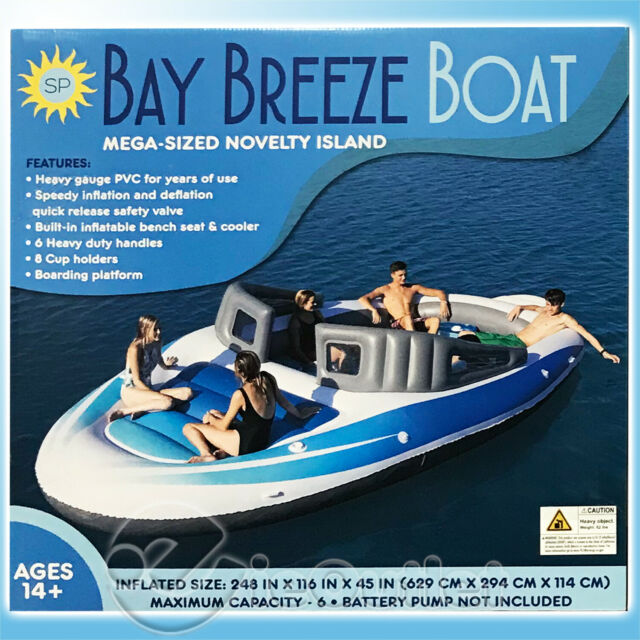
Oh, and what do you win? Good question. A boat float, literally. The Bay Breeze Boat is a mega-sized novelty island. You have to see this thing up close to truly appreciate it!
And to commemorate our 60th (Diamond) Anniversary, if you buy a boat, you’ll receive one Diamond Balloon that contains a wide variety of fantastic discounts!
So, while St. Patrick’s Day is coming—It’s only one day.
While your bracket may offer you the chance to win your inter-office pool—It’ll be busted on the first day.
And even after the ground thaws and you get to see your old lost friend, grass—You know there is an inevitable seventeen-inch snowstorm just dying to ruin your April.
But coming to the 21st Annual Vermont Boat and Marine Show, while it doesn’t provide alcohol, while it can’t offer $73 and office bragging rights, and while it won’t get you excited about using that grass-seed spreader your son got you for Christmas…
It does supply the chance for your family, your friends, and anyone you deem worthy--to enjoy the most fun purchase you will EVER make for years to come.
See you there!
For more details about all offers as it pertains to Woodard Marine, contact us today.
For more information about the Vermont State Boat and Marine Show, click here.
- Team Woodard.
BREAKING NEWS: Winter is coming.
We know...Trust us, we know.
However, even though the boat is in storage, it doesn’t mean you can’t still sink a line in your lake of choice. (#welovebomo) (more…)
We're sad to admit this, and we're sorry to bring it up--Not everyone can leave their boat in the water until the last possible second.
We recently, wrote a blog about Three Reasons to Boat in the Fall--However, we understand everyone doesn't have that luxury. (more…)
Friday: 4:37 in the PM. It’s been one hell of a week. The boss comes down on you for the sake of coming down on you. Clients are complaining because you're the one person they can complain to without being sued. And your spouse is pissed because “we don’t do anything fun anymore”. (more…)
Everything seems to be a “hot take” these days, doesn’t it? Well, if you looked under hot take in Encyclopedia Britannica, you know what you would find? THIS SUMMER! (Teachable Moment: This is the opposite of literally, which is figurative, you’re welcome.) Anyway, you don’t have a pool because who can afford the upkeep? In some cases, it can and will affect the resale value of your home. You “like” to play golf, for fun … Know what’s not fun? Sweating to the point where your skin is covered in Gorilla Glue; everything sticks. (Again, not literally. Figuratively.) (more…)
Rainy days and strong winds might have us running for cover right now, but Summer is just around the corner!
Picture this:
Clear, Blue Skies + a Sunny, 80° Day = The Best Boat Trip Ever
That relaxing day on the water is so close we can practically smell the fresh, lake air. And is there anything better than that? So, there’s No Time to Lose! All service bookings made before April 30th will receive a special, Early Booking Discount! (more…)
Do us a favor, close your eyes. Okay, no, don’t do that, we need you to read this. How about this, use something you haven’t used in a while, your imagination. Pretend you’re a kid, and if you have kids, pretend you’re them. Pretend you’re on your brand-new boat. In front of you is the eternal blue highways splashing mist on your face. Oh, and your face is getting a Swedish massage from the wind blowing against it. Oh, and the wind, it’s stroking your hair with the whisper of a brush of air. (more…)